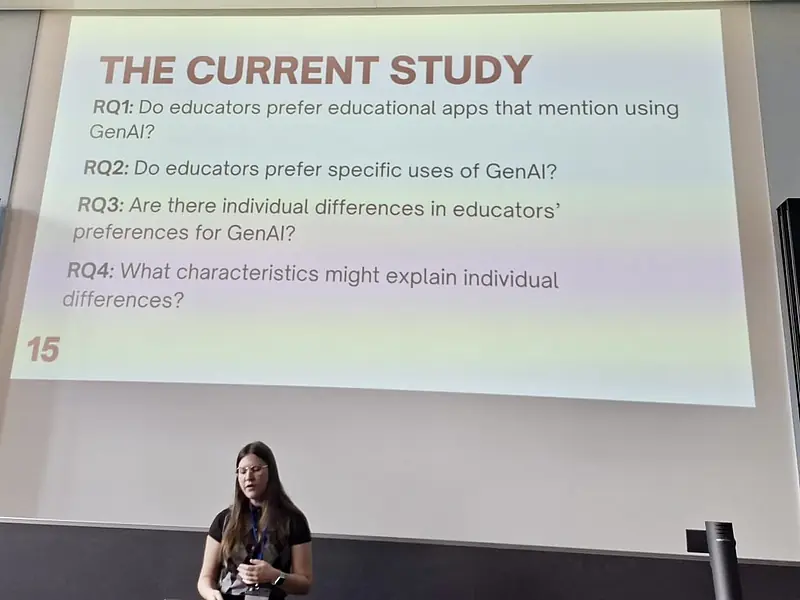
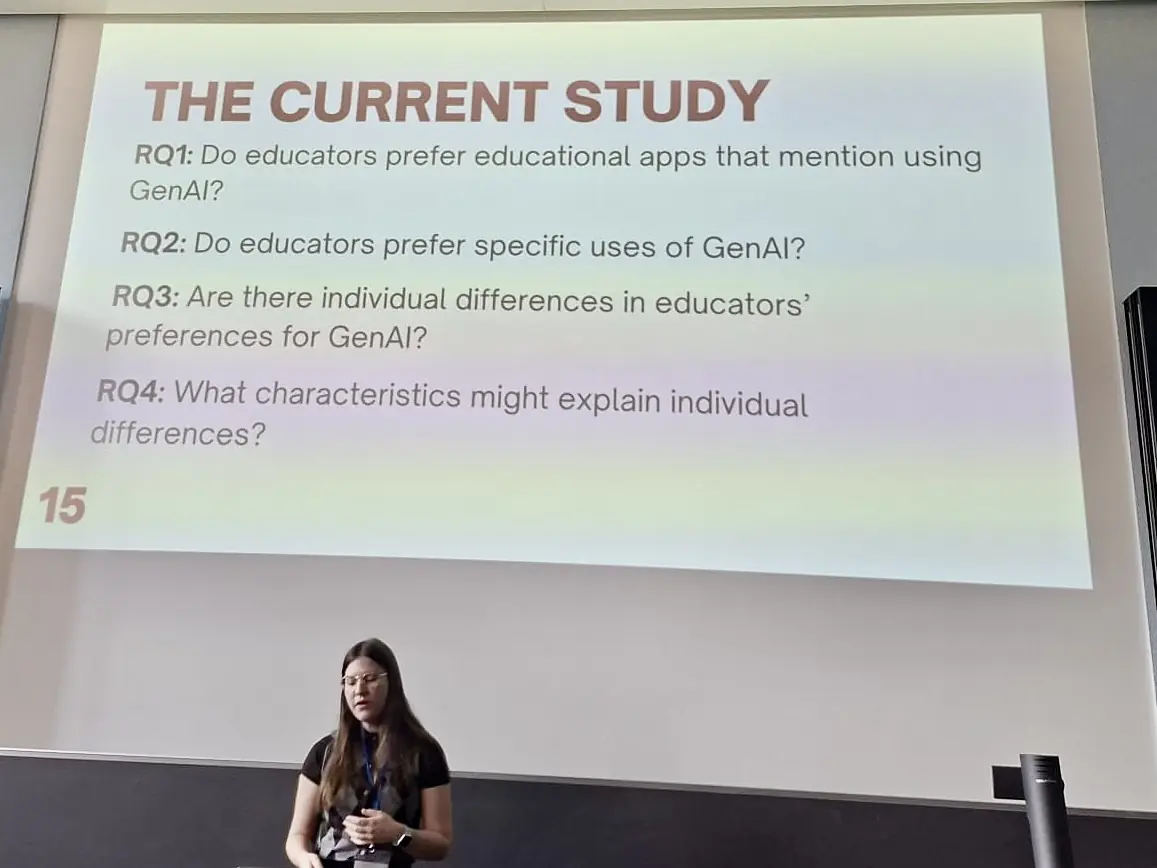
PhD Candidate Emma Liptrot presented her research with Dr. Adam Dubé titled "Adopters, Agnostics, and Resisters: How Elementary Educators Respond to GenAI in Educational Apps" at the EARLI SIG 6 & 7 Conference in Zurich, Switzerland.
The study asks: do educators prefer educational apps that mention using GenAI? It builds on previous "Why This App?" research from the lab, which investigates how educators choose educational apps from app stores using an experimental paradigm.
You can read more about the Why This App? project here:
The study asks: do educators prefer educational apps that mention using GenAI? It builds on previous "Why This App?" research from the lab, which investigates how educators choose educational apps from app stores using an experimental paradigm.
You can read more about the Why This App? project here:
Abstract
As educational tools that incorporate generative artificial intelligence (GenAI) become more commonplace, educators must decide whether to select and use these tools for their classrooms. Using a repeated measures design, we investigated how apps’ use of GenAI impacts educators’ selection of educational apps. 101 K-6 educators in the US, UK, and Canada viewed and evaluated researcher-manipulated educational app pages, then completed measures of their knowledge, attitudes, and use of AI. A repeated measures MANOVA determined that educators rated educational apps using GenAI lower than those without AI, but there were no significant differences in their willingness to download or pay for GenAI apps. Using hierarchical cluster analysis, educators were classified into GenAI resisters (14%), agnostics (58%), and adopters (28%). Most educators were agnostic to GenAI in apps, highlighting a need for more research to support educators’ informed choices of whether and when to use GenAI tools. Preliminary evidence suggests that adopters reported higher knowledge, attitudes, and use of AI compared to adopters and resisters. Future research may build on our established classifications of educators to further explore how various factors predict educators’ willingness to adopt GenAI tools.
As educational tools that incorporate generative artificial intelligence (GenAI) become more commonplace, educators must decide whether to select and use these tools for their classrooms. Using a repeated measures design, we investigated how apps’ use of GenAI impacts educators’ selection of educational apps. 101 K-6 educators in the US, UK, and Canada viewed and evaluated researcher-manipulated educational app pages, then completed measures of their knowledge, attitudes, and use of AI. A repeated measures MANOVA determined that educators rated educational apps using GenAI lower than those without AI, but there were no significant differences in their willingness to download or pay for GenAI apps. Using hierarchical cluster analysis, educators were classified into GenAI resisters (14%), agnostics (58%), and adopters (28%). Most educators were agnostic to GenAI in apps, highlighting a need for more research to support educators’ informed choices of whether and when to use GenAI tools. Preliminary evidence suggests that adopters reported higher knowledge, attitudes, and use of AI compared to adopters and resisters. Future research may build on our established classifications of educators to further explore how various factors predict educators’ willingness to adopt GenAI tools.
💡
Most educators were agnostic to GenAI in apps, highlighting a need for more research to support educators’ informed choices of whether and when to use GenAI tools.